
As the United States approaches 250 years of independence, the milestone invites a unique kind of commemoration that we only get once in a generation. To live in this moment is to get a chance to reflect on how our country as a whole became a much larger, more layered democracy sustained by vast, storied institutions, such as election administration.
The sheer scale of this transformation is breathtaking: the U.S. grew from nearly 2.8 million people at its foundation to roughly 342.0 million residents today. As the years progressed, more people meant more voters, expanding the need for an increasingly robust system of representation, governance, and election administration.
That growth changed more than just population totals. It expanded the very scope of public administration as a whole, the volume of democratic participation, and the expectations citizens place on government. As the National Archives recently noted, the work of democracy is never over, and this milestone underscores that self-government has always been something Americans continue to build, refine, and steward over time.
Nowhere is that evolution clearer than in how we run elections. Democracy has expanded not only through founding documents and constitutional milestones, but through the practical systems that maintain voter registration data, publish voter turnout data and open elections data, strengthen election transparency, and support post election audit work after ballots are cast.
Democracy owes its growth to stories of nationwide upheaval, struggles, electoral victories, defeats, and even actual battles hard fought and won. As big as the picture can be, something as seemingly simple as election management software belongs in this longer story of institutions adapting to scale, complexity, and the public need for trust.

From a Young Republic to an Expanding Democracy
American democracy has changed significantly over the past 250 years. As the country grew, democratic participation expanded, institutions evolved, and election administration adapted to serve an increasingly large and diverse electorate. Alongside those changes came higher expectations for accountability, accessibility, and public service.
U.S. history leading to the present has been full of such profound change. In many ways, the United States can be thought of as one, big testament to humanity’s ability to do just that: change! Technology, in its most elemental sense, represents change as well. This is why, at its core, the story of technology and civic engagement is the story of where these two kinds of change intersect – where the growth of humanity and our principles meet the expanding ways we have invented to propel our societies further towards an even more aspirational union.
People change, and as they change, so too does the makeup of the electorate they form. Over the past three decades, registered voters have become more racially and ethnically diverse, more educated, older, and more religiously diverse, which means public institutions now serve a far more varied electorate than they once did. In a way, this growth presents those of us in election spaces with a beautiful, expanding picture.
Every election becomes part of the nation’s history. As records have transitioned from paper archives to digital systems, civic technology has helped election offices preserve, manage, and share that information more effectively for future generations.
Election Administration Over Time
Technology, however, is of little use without humans who put it into action. Modern democracy is administered through an infrastructure that is pivotally human. In the 2024 general election, more than 770,000 individuals served as poll workers. This gives us a vivid sign that civic technology operates within a large public-service workforce rather than apart from it.
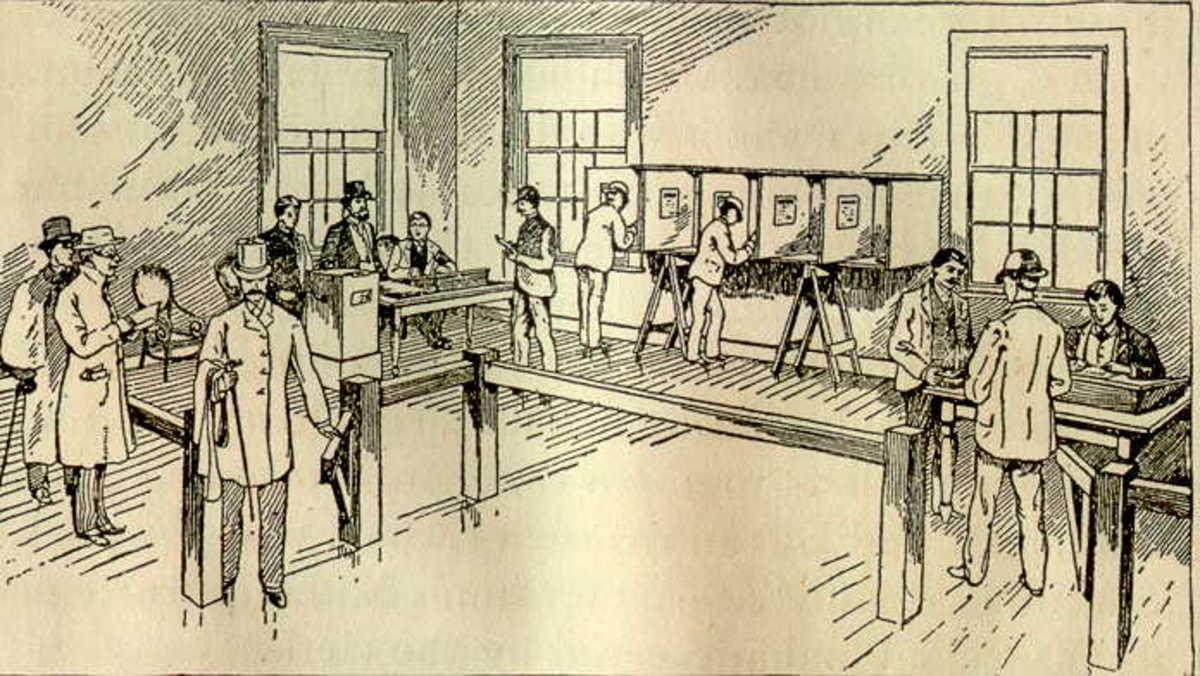
What began 250 years ago as a more limited local function now involves data management, logistics, accessibility, training, and public reporting at a much larger scale. The 2024 EAVS found that nearly 40% of jurisdictions used electronic poll books, showing how election management software has become part of routine operations alongside paper records and in-person administration. At the same time, the share of jurisdictions reporting hand-counting paper ballots rose to 21% in 2024, which suggests that modern civic technology often supports hybrid processes instead of replacing traditional ones outright.
The role of local offices also extends well beyond Election Day. As the EAC notes, election-night returns are not final results; officials still have to reconcile records, complete the canvass, and prepare the documentation that supports certification and long-term election transparency. In that sense, the most useful systems are the ones that help staff move accurately from initial reporting to official records that the public can review and trust.
Recent survey data also shows how much the job has widened in just the past few years: 92% of local election officials say they have taken critical steps to increase election security since 2020. That broader mandate helps explain why civic technology now sits at the intersection of staffing, security, documentation, and technology and civic engagement, with growing interest in tools that improve ballot transparency without adding unnecessary complexity for administrators.
Over 250 years, election administration has evolved from a relatively modest clerical task into a complex public institution, and the strongest civic technology now reinforces the careful procedures that keep democratic self-government legible and durable.

Carry the Next 250 Years Forward With Smarter Civic Technology
For 250 years, American democracy has continued to evolve. At Civera, we’re honored to support election offices as they prepare for the future with technology that helps make election information more accessible, transparent, and easier to manage.