The U.S. Bicentennial became a people’s celebration on a scale earlier anniversaries could not easily match: National Archives notes that communities hosted more than 66,000 projects and events nationwide. This scale is the starting point for understanding why the anniversary still feels relevant to modern civic life.
The contrast with the nation’s 150th anniversary is striking. In 1926, the Sesquicentennial centered largely on Philadelphia through a World’s Fair-style exposition that celebrated the country’s founding where it began.
By 1976, organizers embraced a different vision. Rather than asking Americans to travel to one commemorative center, the Bicentennial reached outward into towns, schools, libraries, historical societies, public agencies, and community organizations across the country.

Source: Smithsonian
That broader approach proved especially meaningful during a decade marked by political polarization, economic uncertainty, and declining trust in government. The Bicentennial did not erase those challenges, but it created opportunities for communities to celebrate, reflect, and participate together in ways that felt local as well as national.
The shift was also institutional. Congress established the American Revolution Bicentennial Administration on December 11, 1973 to coordinate projects, events, and activities celebrating 200 years of American life. Its arduous work involved the general public, public and private institutions, state and local officials, and private individuals, which made the anniversary less like a single fair and more like a national civic network.
That nationwide network depended on communication as much as ceremony. Radio interviews, televised broadcasts, press conferences, local committees, and printed schedules helped communities discover and participate in Bicentennial events. Rather than remaining centered in one location, the celebration became something people could experience where they lived.
The American Freedom Train embodied that idea. Beginning its cross-country journey on April 1, 1975, it brought historic artifacts directly to communities across 48 states and was seen by more than seven million Americans. The train became one of the Bicentennial’s clearest symbols that civic participation grows when national history becomes accessible at the local level.

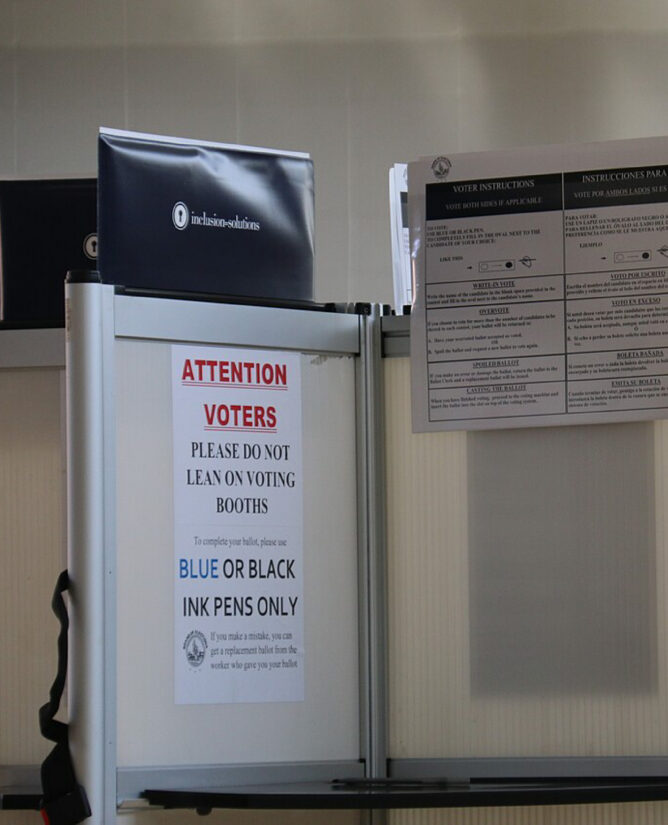
The Bicentennial demonstrated that participation grows when public institutions meet people where they are. Today, that same principle applies to election administration. Election data, campaign finance records, ballot information, and certification processes become far more meaningful when they are presented in ways residents can easily find, understand, and use.
The same pattern offers a useful lesson for civic technology today: participation grows when public information is easier to find, easier to understand, and easier to trust. That starts with transparency that explains the process, not just a results page. The U.S. Election Assistance Commission notes that almost every part of the election process involves two or more trained officials, and it provides guidance on how results move from unofficial to official. When civic technology makes these safeguards searchable, visual, and easier to follow, voters are more likely to hear the latest on election administration straight from the source – election administrators.
The Bicentennial showed how widespread innovation, local ownership, and community participation can strengthen civic life. Fifty years later, the same principle still holds true. Technology cannot replace public service, but it can help make election administration more visible, understandable, and accessible. Just as the Bicentennial brought a national story closer to local communities, today’s civic technology can help bring public information closer to the people it serves.